








Lorem ipsum dolor sit amet 3
Lorem ipsum dolor sit amet, consectetur adipiscing elit, sed do eiusmod tempor incididunt ut labore et dolore magna aliqua. Ut enim ad minim veniam, quis


Grant PID2022-137651NB-I00 funded by MICIU/AEI/
10.13039/501100011033 and by “ERDF A way of making Europe”


A basic principle of democratic government is that citizens elect their representatives through free and fair elections. However, many democratic systems preserve a non-elected, unaccountable institution who plays an important role in the political system: monarchy. As of 2025, there remain ten constitutional monarchies across Europe. As an institution, monarchies receive a relevant proportion of public funding and play core ceremonial and representative functions. Despite this, so far, Political Science has devoted little effort to understanding the performance of the different monarchies in Europe and how do they differ among each other.
The project “European Monarchies in Comparative Perspective” (THE CROWNS)” aims to analyse contemporary European monarchies from a comparative and multidisciplinary approach that encompasses disciplines such as Political Science, Constitutional Law and Marketing.
The project will deliver new novel data on two critical aspects on contemporary European monarchies: their performance and legitimacy. To this end, the project is divided in three work packages (WP).


WP1 is focused on the theoretical definition of the project. Contemporary monarchies exhibit different personal (identified in the person of the king) and institutional (identified both in the royal institution and the larger royal family) attributes that make up distinctive types of monarchic “brands”. Through WP1, we will theoretically define monarchies’ personal and institutional attributes to understand the extent to which such attributes are connected to the construction of different brands across European royal institutions and how those brands affect monarchies’ performance and legitimacy.
In WP2 we are launching the first ever expert survey on monarchies in Europe. The Comparative Monarchies Survey (CMS) compares the personal and institutional attributes of monarchies using an expert survey in six European countries (Spain, the UK, Belgium, the Netherlands, Sweden and Norway). The CMS will generate a country-level dataset which will be made publicly available for the wide research community.
WP3 will develop survey experiments in Spain to properly understand the psychological mechanisms by which citizens are (un)willing to support the monarchy, and the extent to which they might judge differently scandals committed by the same king or a member of the royal family, and those committed by elected representatives.


John M.T. Balmer is Professor Emeritus at Brunel Business School, University of London.
Quondam Professor of Corporate Brand/Identity Management (Bradford University). Known as the «father» of the corporate brand field. Enjoys international renown for his scholarship on Corporate Brand/Identity and Corporate Marketing globally.

Robert Hazell is the founder and first director of the Constitution Unit at University College London, where has been Professor of Government and the Constitution in the Department of Political Science.
His last two books are on the monarchy, and the royal prerogative.
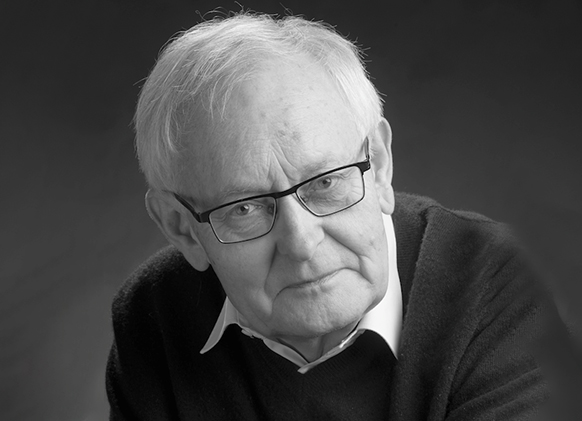
Jorgen Elklit is a Professor of Political Science at Aarhus University (Denmark). Political scientist with specialization in electoral behavior, political attitudes, electoral systems and electoral administration.
Extensive experience as an international advisor on elections and democratization in Asia, Africa and Europe.
.

Cleopatra Veloutsou is a Professor of Brand Management in the University of Glasgow Adam Smith Business School in the UK.
Her primary research interest is on Brand Management: brand centric relationships, brand equity, brand co-creation, industrial products and luxury brands.

Mark Thompson is chair professor in the Department of Public and International Affairs, City University of Hong Kong, his research is in the field of comparative politics, with a regional focus on Southeast Asia.
He is among the world’s top most-cited scientists in the subfield of Political Science. He has been a past president of the Hong Kong Political Science Association and the Asian Political and International Studies Association.


OUTPUT
Garrido, A. (2025). Horizontes de tiempo y ciclos políticos en monarquías y repúblicas: una perspectiva comparada [Time Horizons and Political Cycles in Monarchies and Republics: A Comparative Perspective]. En Juan R. Rodríguez-Drincourt y Dulce M. Santana, eds., La Jefatura del Estado (en prensa).
Rollnert-Liern, G. (2025). Análisis transversal de la posición del Rey en el contexto europeo. En Juan R. Rodríguez-Drincourt y Dulce M. Santana, eds., Congreso Internacional sobre la Jefatura del Estado en la Monarquía Parlamentaria, 2024, en prensa.
Rollnert-Liern, G. (2025). Algunas notas sobre la monarquía española. Liber amicorum Yolanda Gómez Sánchez, en prensa.
Garrido, A., Martínez, A. & Mayordomo, C. (2024). La monarquía española como una marca corporativa: branding de instituciones políticas [The Spanish Monarchy as a Corporate Brand: Branding of Political Institutions]. Política y Sociedad, 61, 3, e92407. https://dx.doi.org/10.5209/
poso.92407
Rollnert-Liern, G. (2024). El poder de reserva del Rey: experiencias comparadas. La función constitucional del Rey: teoría y práctica (pp. 267–302). Madrid: Reus.
Garrido, A., Martínez, A. & Mora, A. (2023). Public Opinion and Forms of Government: The Monarchy-Republic Debate in Spain. International Journal of Iberian Studies, 36, 1, 61-81.
https://doi.org/10.1386/
ijis_00091_1
Aragón Reyes, Manuel; Expósito Gómez, Enriqueta; De la Iglesia Chamarro, Asunción; Oliver Araujo, Joan; Pascual Medrano, Amelia; Porras Ramírez, José María; Rollnert Liern, Göran; y Sánchez Navarro, Ángel José (2023). Encuesta sobre la Corona. Teoría y Realidad Constitucional, 51, 15-85. https://doi.org/10.5944/
trc.51.2023.37502.
Rollnert-Liern, G. (2022). La Corona en las democracias escandinavas. En Javier Tajadura Tejada (ed.), La jefatura del Estado parlamentario en el siglo XXI, (pp. 237-284). Sevilla: Athenaica.
Garrido, A., Martínez, A. & Mora, A. (2021). The Media and the Spanish Monarchy: The Mediating Role of Ideology. En A. Rocha; D. Barredo; P. C. López & I. Puentes (eds.), Communication and Smart Technologies. Springer (pp. 114-122). https://doi.org/10.1007/978-981-16-5792-4_12
Rollnert-Liern, G. (2021). La monarquía parlamentaria española en perspectiva comparada. En Víctor Lapuente Giner y otros, Reinventando la tradición. Las monarquías parlamentarias en el siglo XXI (pp. 33-54). Cizur Menor: Thomson Reuters Aranzadi.
Garrido, A., Martínez, A. & Mora, A. (2020). Monarquía y opinión pública en España durante la crisis: el desempeño de una institución no responsable bajo estrés [Monarchy and Public Opinion in Spain during the crisis: The Performance of an Unaccountable Institution Under Stress]. Revista Española de Ciencia Política, 52, 121-45.
https://doi.org/10.21308/recp.52.05
Rollnert-Liern, G. (2020). Monarquía. En Real Academia de Ciencia Morales y Políticas. Enciclopedia de las Ciencias Morales y Políticas para el siglo XXI. Ciencias Políticas y Jurídicas (con especial referencia a la sociedad pos-Covid-19) (pp. 923-926). Madrid: Boletín Oficial del Estado.
Rollnert-Liern, G. (2020). El discurso del Rey del 3-O: los límites de la integración política. En J. Martin Cubas, (coord.), Constitución, Política y Administración: repensando la constitución + 4 décadas después (pp. 201-210). Valencia: Tirant lo Blanch.
Garrido, A. (2024). La monarquía como una marca corporativa: la jefatura de Estado desde la Ciencia Política y el Marketing. Seminar “The Head of State”, Doctoral School of the University of Las Palmas de Gran Canaria, December 13.
Garrido, A. (2024). Branding de monarquías: la marca “monarquía” y la marca “Felipe VI” en perspectiva comparada. V Congreso Internacional del Instituto Complutense de Ciencia de la Administración. Working Group 18: Perspectives on the Monarchy and other non-accountable Institutions. Complutense University of Madrid, 20-22 November. Publica
Belmonte-Martin, I. (2024). Coordinator of Working Group 18: Perspectives on the Monarchy and other non-accountable Institutions. V Congreso Internacional del Instituto Complutense de Ciencia de la Administración. Complutense University of Madrid, 20-22 November.
Belmonte-Martin, I. & Grønn, Berit (2024). Monarchical dynamics in Norway and Spain: a proposal for a comparative study framework. V International Congress of the Complutense Institute of Administration Science. Complutense University of Madrid, 20-22 November.
Garrido, A. (2024). Branding institucional: la marca “monarquía de España” y la marca “Felipe VI” en perspectiva comparada. XVII Spanish Congress of Political Science and Administration, AECPA, Working Group 2.3: The monarchy and other non-accountable institutions: control and political performance. University of Burgos, 22-24 July.
Belmonte-Martin, I. (2024). Coordinator of Working Group 2.3: The monarchy and other non-accountable institutions: control and political performance. XVII Spanish Congress of Political Science and Administration, AECPA, University of Burgos, 22-24 July.
Garrido, A. (2024). La gestión del tiempo y de los ciclos políticos desde la Jefatura del Estado: monarquías y repúblicas en perspectiva comparada. International Conference on the Head of State in a Parliamentary Monarchy, Carlos III University of Madrid. April 23.
Rollnert Liern, G. (2024). Mesa redonda “Una perspectiva comparada y de contraste de la Jefatura del Estado en las formas de gobierno monárquicas y republicanas». Congreso Internacional sobre la Jefatura del Estado en la Monarquía Parlamentaria. Universidad de Las Palmas de Gran Canaria – Instituto de Derecho Público Comparado “Manuel García Pelayo”, Universidad Carlos III de Madrid, 25 de abril.
Rollnert Liern, G. (2024). La jefatura del Estado en la monarquía parlamentaria española. Congreso Internacional sobre la Jefatura del Estado en la Monarquía Parlamentaria. Universidad de Las Palmas de Gran Canaria – Instituto de Derecho Público Comparado “Manuel García Pelayo”, Universidad Carlos III de Madrid, 25 de abril.
Rollnert Liern, G. (2022). Mesa de debate “Las monarquías parlamentarias en el Derecho Comparado”. Curso de Verano España y la Monarquía Parlamentaria, Universidad Francisco de Vitoria, Madrid, 19 de julio.

DATA
Lorem ipsum dolor sit amet, consectetur adipiscing elit, sed do eiusmod tempor incididunt ut labore et dolore magna aliqua. Ut enim ad minim veniam, quis
Lorem ipsum dolor sit amet, consectetur adipiscing elit, sed do eiusmod tempor incididunt ut labore et dolore magna aliqua. Ut enim ad minim veniam, quis
Lorem ipsum dolor sit amet, consectetur adipiscing elit, sed do eiusmod tempor incididunt ut labore et dolore magna aliqua. Ut enim ad minim veniam, quis

BIBLIOGRAPHY
Martín-Llaguno, M., Navarro-Beltrá, M. & Berganza, R. and García-Almarcha, L. (2024). Media Evdents in the Digital Age: Analysis of the Treatment of Elizabeth II and Juan Carlos I During the State Funeral. Journalism and Media, 5, 1571-1589.
https://doi.org/10.3390/
ournalmedia5040098
Llera, F. J. and León Ranero, J. M. (2024), La juventud española dialoga sobre la Monarquía. Documento de trabajo 05/2024, Junio. Red de Estudio de las Monarquías Contemporáneas, REMCO.
Jiménez Torres, D. (2024). Los intelectuales y la monarquía (1902-2022). Documento de trabajo 04/2024, Mayo. Red de Estudio de las Monarquías Contemporáneas, REMCO.
Álvarez, E. (2024). Familias reales europeas menguantes. Un fenómeno imparable en aras de la racionalización y modernización de la institución en el siglo XXI. Documento de trabajo 03/2024, Mayo. Red de Estudio de las Monarquías Contemporáneas, REMCO.
Rivero, Á. (2024). ¿Por qué las monarquías producen mejores democracias? Documento de trabajo 02/2024, Abril. Red de Estudio de las Monarquías Contemporáneas, REMCO.
Domínguez-García, R. (2024). Estrategias de comunicación digital de la Casa Real británica durante la muerte y los funerales de Estado de Isabel II. Revista Estudios Institucionales: Revista Internacional de Investigación en Instituciones, Ceremonial y Protocolo, 11, 39–56.
Rivera Otero, J. M., Jaráiz Gulías, E. and Mo Groba, D. (2023). Monarquía y emociones: el factor temporal en la valoración institucional y personal del rey Emérito en España. Historia y comunicación social, 28, 1, 121-132.
Herrero-Jiménez, B., Berganza Conde, R. and Gómez Montero, E. L. (2023). La monarquía española a examen: del silencio consensuado de los medios a los enfoques de ataque y defensa en el caso de los escándalos de Juan Carlos I. Revista Latina de Comunicación Social, 81, 230-249.
Cocera Arias, P. 2023. Ceremonias funerarias: Una mirada desde el poder blando. Comparativa de los Funerales de Isabel II dee Inglaterra, Benedicto XVI y Constantino II de Grecia. Revista Estudios Institucionales: Revista Internacional de Investigación en Instituciones, Ceremonial y Protocolo, 10, 245–86.
Anckar, C. (2022). Presidents, Monarchs, and Prime Ministers: Executive Power Sharing in the World. Cham: Springer.
Balmer, J. M. T. (2022). “How Queen Elizabeth II made the British Monarchy into a Global Brand”, The Conversation, 13, septiembre.
Guillen, M., Penadés, A., Molina, I., Rollnert, G and Lapuente, V. (2022). Las monarquías parlamentarias en el siglo XXI. Reinventando la tradición, Navarra: Aranzadi.
Aumaitre, A. y A. Penadés (2022). “Monarquías y democracias”, en V. Lapuente, ed., Las monarquías parlamentarias en el siglo XXI. Reinventando la tradición, Navarra, Aranzadi, pp. 75-102.
Tajadura, J., ed., (2022). La jefatura del Estado parlamentario en el siglo XXI, Sevilla, Athenaica.
Martín-Llaguno, M., Berganza, R. & Navarro-Beltrá, M. (2022). Accountability of Unaccountable Institutions: Oversight of the Press, Social Networks, and the Spanish Parliament over the Spanish King Emeritus. Profesional de la Información, 31, 4.
Martín-Llaguno, M., Navarro-Beltrá, M. & Berganza, R. y (2022). “La relación entre la agenda política y la agenda mediática en España: el caso de los escándalos de Juan Carlos I. Ámbitos. Revista Internacional de Comunicación, 57.
Pulido-Polo, Marta, Gloria Jiménez-Marín, Concha Pérez Curiel, and José Vázquez-González. 2022. Twitter como herramienta de comunicación institucional: La Casa Real Británica y la Casa Real Española en el contexto postpandémico. Revista de Comunicación, 21, 225–43.
CONTACT